
3 min read
The XRP Paradox
Seven Uncomfortable Truths About Ripple and XRP
Ripple can succeed without XRP holders becoming wealthy. Owning XRP does not confer equity, dividends or rights to Ripple's corporate revenue.
1. MoneyGram was paid to use Ripple technology
MoneyGram reported $11.3 million in Ripple market development fees in 2019 and $50.2 million in 2020: $61.5 million combined. It reported that it did not pay Ripple for use of ODL or related software. Transactions under the agreement stopped in December 2020. This was a subsidized commercial relationship, not proof of independent demand at unsubsidized prices.
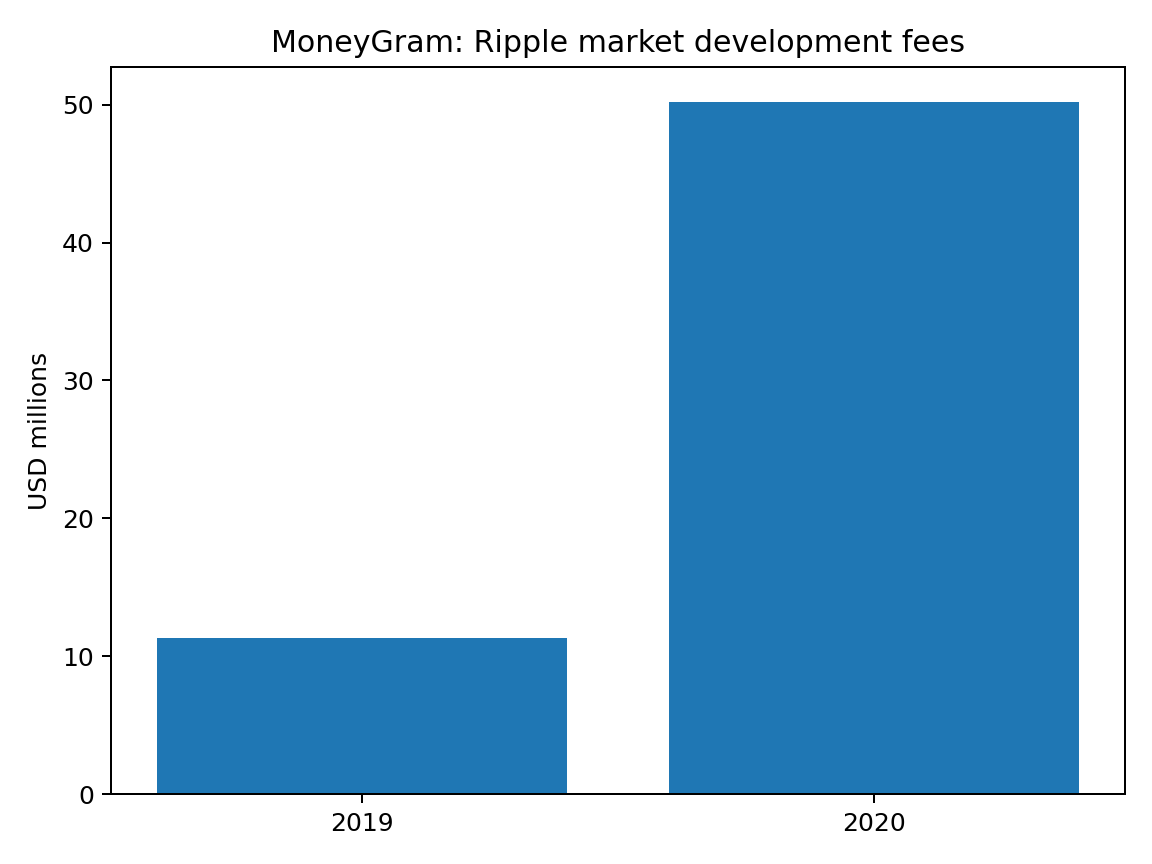
Source: MoneyGram 2020 SEC Form 10-K
2. Ripple built an alternative to XRP
RLUSD, Ripple's dollar-backed stablecoin, overlaps with XRP's proposed uses in payments, liquidity and settlement. It operates on Ethereum as well as the XRP Ledger. Ethereum-based settlement does not inherently require XRP. Ripple may earn reserve income without XRP holders receiving any entitlement to it. RLUSD can complement XRP or substitute for it in some workflows.
Illustrative payment routes
USD ──> XRP   ──> EUR
USD ──> RLUSD ──> EUR  (Ethereum route)
Source: Ripple stablecoin product page
3. Speed undermines the simplistic trillion-dollar valuation argument
The same liquidity can be reused repeatedly. Under a simplified steady-flow model, average capital in transit equals daily payment volume multiplied by recycling time divided by 86,400 seconds.
| Daily volume | Recycling time | Average capital in transit |
|---|---|---|
| $1 trillion | 5 seconds | $57.87 million |
| $1 trillion | 10 seconds | $115.74 million |
| $1 trillion | 60 seconds | $694.44 million |
| $1 trillion | 300 seconds | $3.47 billion |
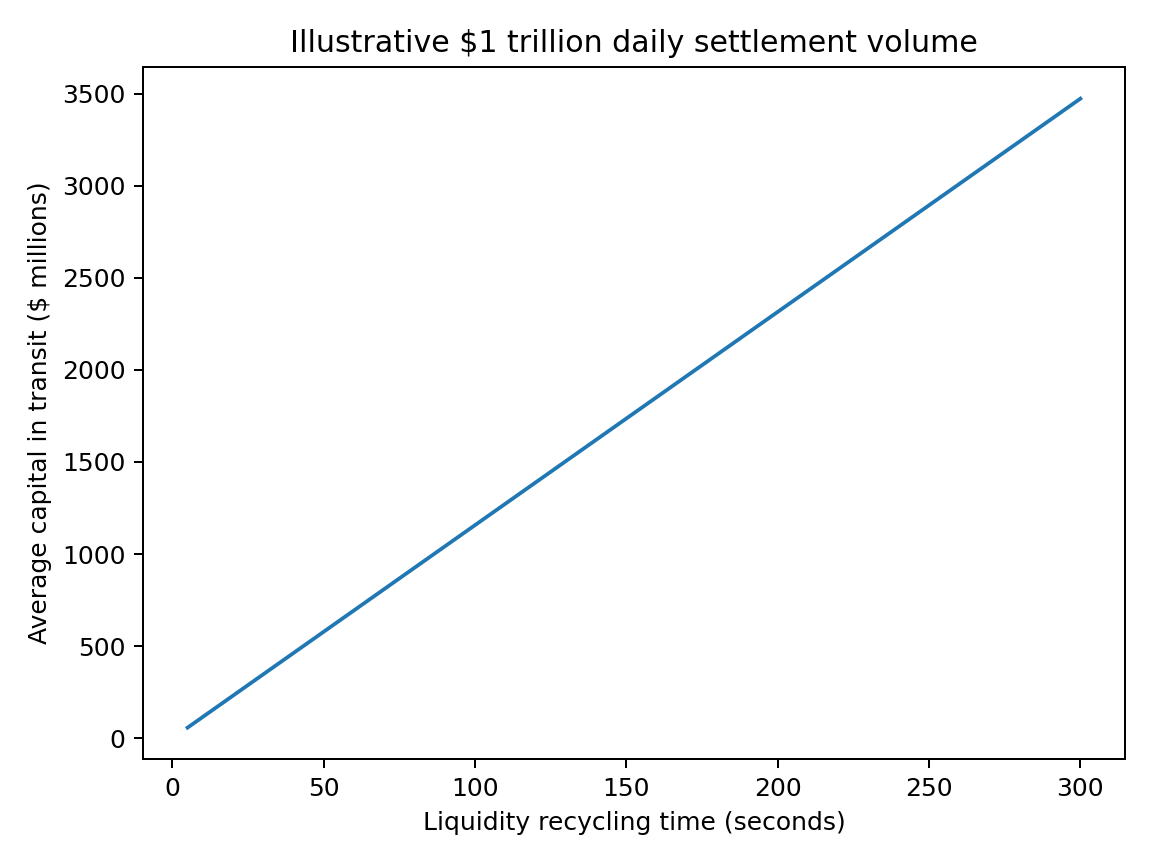
This is illustrative, not a price prediction or estimate of total necessary liquidity. Real markets require buffers, market depth, rebalancing and management of volatility and peak demand. Payment volume alone cannot determine XRP's price.
4. The standard transaction burn is tiny
At the documented standard base fee of 0.00001 XRP:
| Transactions | XRP burned |
|---|---|
| 1 million | 10 |
| 1 billion | 10,000 |
| 100 billion | 1 million |
| 1 trillion | 10 million |
At a hypothetical one billion transactions per day, annual burn would be 3.65 million XRP, or 0.00365% of the original 100 billion supply. Burning 1% would take approximately 274 years at that constant rate.
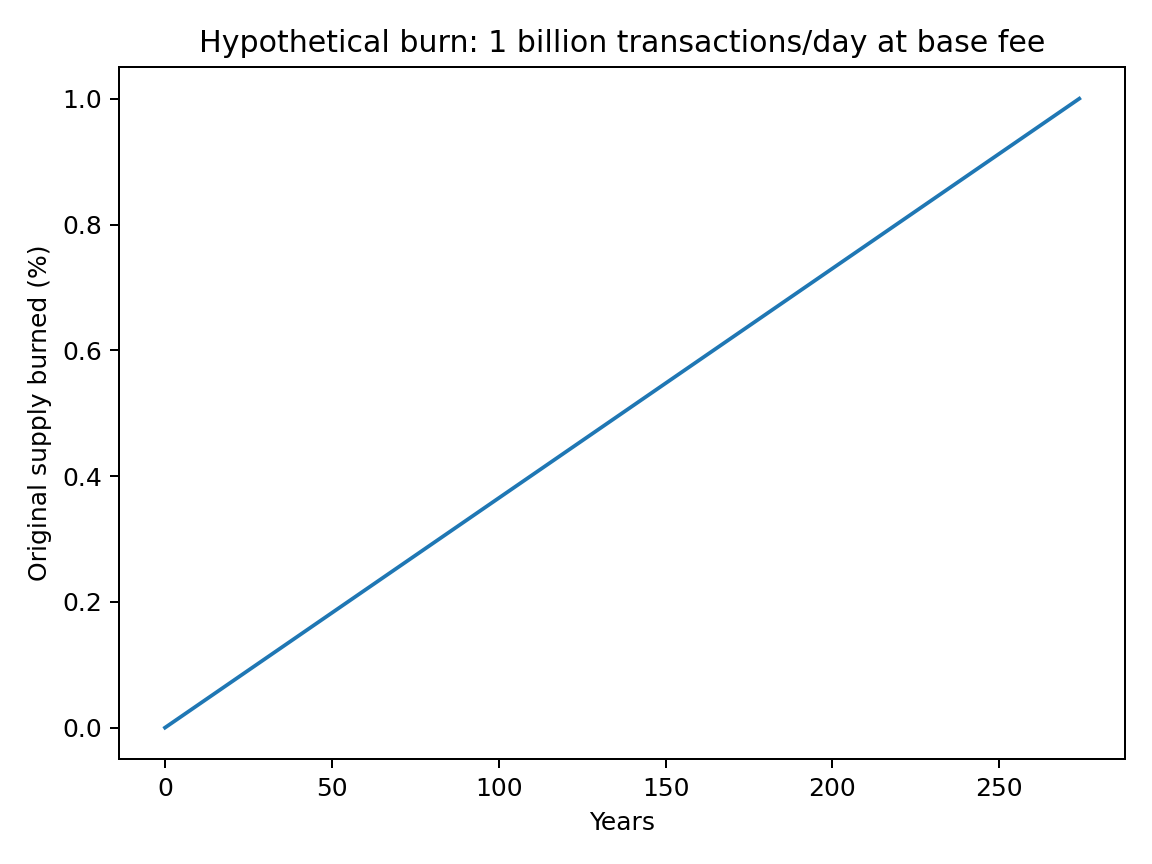
Actual fees vary; this transaction rate is not an established network capacity.
Source: XRPL transaction costs
5. Ripple received 80% of the original supply
All 100 billion XRP were created at inception. The founders allocated 80 billion to the company and retained 20 billion. Decentralized validation and concentrated initial economic ownership are different things.
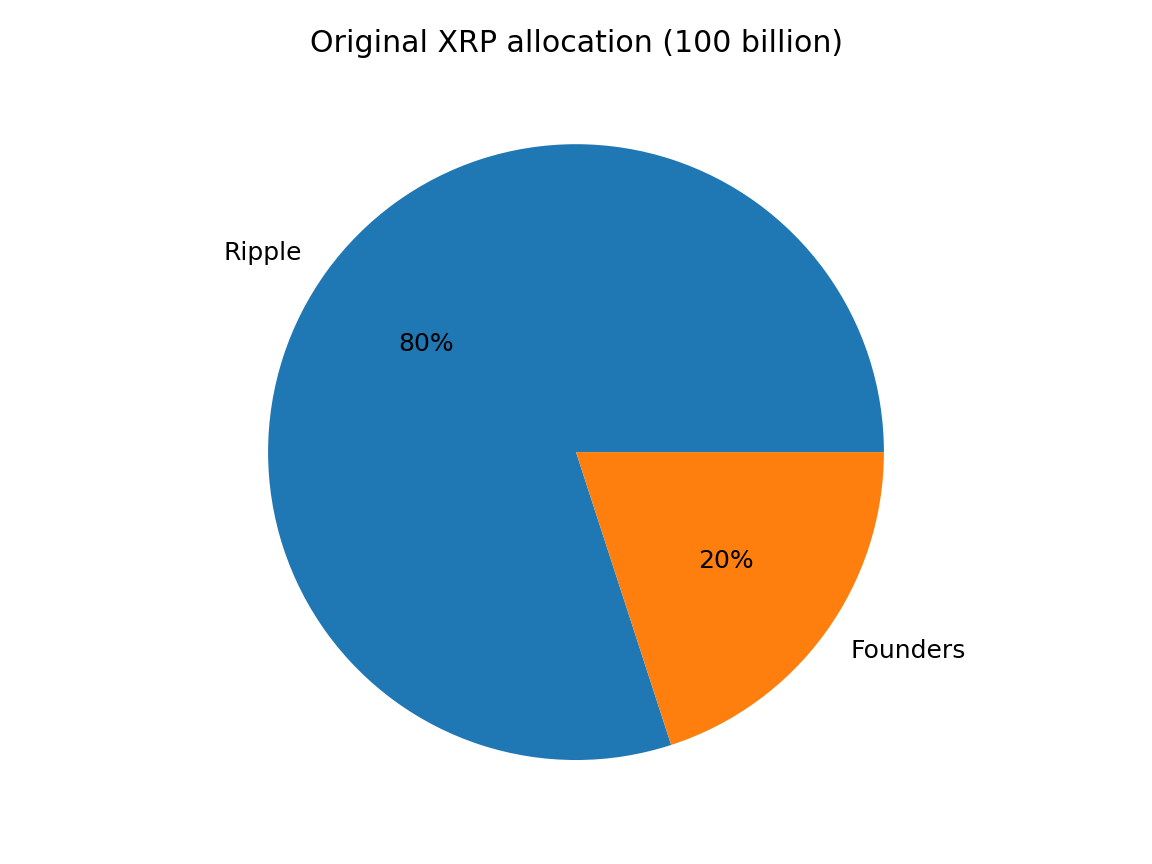
At $10 per XRP, that original corporate allocation would have had a nominal value of $800 billion. This is neither current ownership nor realizable cash.
6. The XRP Ledger can bypass XRP as a bridge asset
Auto-bridging uses XRP when it offers a cheaper conversion path. Direct conversion between issued currencies is also possible. XRP may still be needed for small network fees.
Issued USD ──────────────────> Issued MXN
      └────────> XRP ────────────┘
          Alternative bridge route
The ledger optimizes payment paths, not XRP's market price. Network activity does not necessarily translate into equivalent bridge-asset demand.
Source: XRPL cross-currency payments
7. The irony of Ripple's court victory
In the July 13, 2023 ruling, Judge Analisa Torres found Ripple's institutional sales constituted unregistered investment contract offerings, while reaching a different conclusion for programmatic sales. The evidence did not establish the requisite reasonable expectation of profits from Ripple's efforts under the circumstances of those programmatic transactions.
Yet many investors justify buying XRP precisely by pointing to Ripple's executives, partnerships and commercial expansion. The ruling is not an endorsement of XRP as a corporate investment, nor does it establish that XRP cannot appreciate.
Source: Federal court ruling, July 13, 2023
The question every XRP investor should ask
What specific economic mechanism forces Ripple's commercial revenue to accrue to XRP holders?
| Ripple achieves… | Automatic financial benefit to XRP holders? |
|---|---|
| Increased corporate profits | No |
| Major banking partnership | No |
| Successful IPO | No |
| Increased stablecoin reserve income | No |
| Multibillion-dollar acquisition | No |
| Increased payment processing revenue | No |
| Increased XRPL transaction volume | Not necessarily |
| Sustained XRP demand exceeding available supply | Potential price appreciation |
There is a legitimate bullish case involving liquidity, network effects, adoption and scarcity. None of these arguments proves XRP will fail. They challenge the assumption that corporate success guarantees token appreciation.
The technology can succeed. The company can succeed. The investment thesis can still fail.